
How Soon is Meaning?
Sawako Nasu x Johnny Mae Hauser
2026年 1月 30日
ー
2月 22日
SOM GALLERY
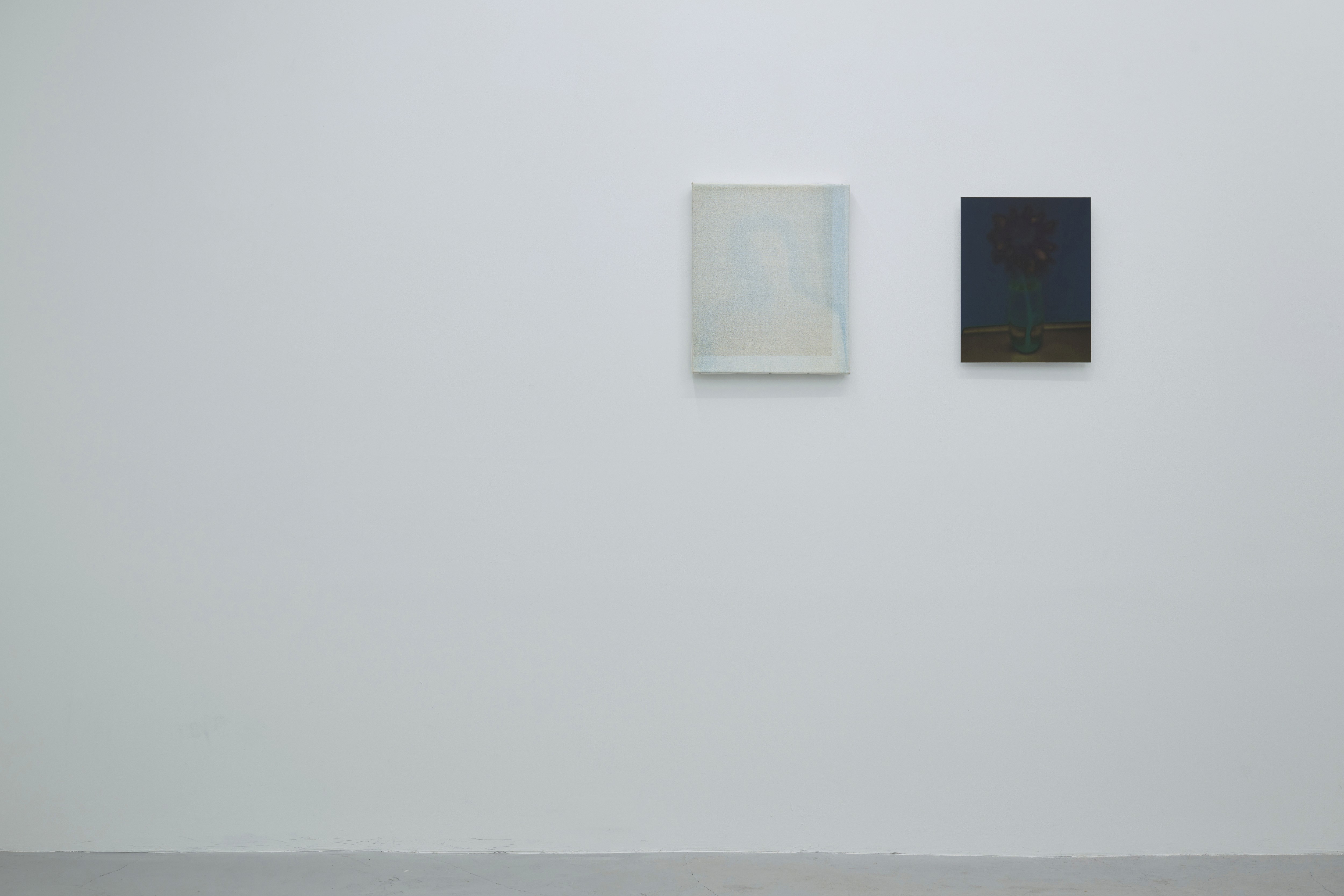
SOM GALLERY is delighted to announce "How Soon is Meaning", a duo show by Sawako Nasu and Johnny Mae Hauser on view from January 30 to February 22.
Working across the distinct media of painting and photography, the exhibition brings together two artistic practices that quietly resonate through a shared attitude: rather than seeking to assert images, both artists maintain a measured distance from their fixation and recuperation. Through this dialogue, the exhibition considers how art may still take form today—at a moment when human-centered thinking has reached its extreme, in the midst of the Anthropocene.
The Anthropocene refers to an era in which human activity and value judgments have become planetary conditions, and in which objects and images are rapidly organized and absorbed into frameworks of human meaning and utility. Images are expected to be immediately legible, swiftly reclaimed as meaning or value. Against this backdrop, the exhibition asks under what conditions art may still come into being, while also considering how beauty might persist without being reduced to consumption or explanation.
Sawako Nasu’s paintings sustain the distance between past art and the present self without attempting to bridge it. Her engagement with classical and modernist traditions is not treated as a rupture to be resolved, but held on the pictorial surface as a precondition for the work’s existence. Brushstrokes and open space function less to determine meaning than to maintain a state prior to time being bound into a single image, allowing the work to avoid immediate absorption into history or narrative.
Working primarily with photography, Johnny Mae Hauser explores perception at the threshold where feeling precedes recognition. Beginning from figurative subjects such as still lifes and landscapes, her photographs are composed through softened focus and restrained chromatic fields, resisting completion as images that can be immediately grasped or understood. The stillness that permeates her work does not appear as absence or lack, but rather as a condition that allows the act of looking to unfold without being hurried.In Hauser’s practice, meaning is not given through representation. Emotion and memory are not explained or illustrated, but gradually emerge through the experience of looking itself. As a result, her images do not readily enter circuits of visualization, naming, or evaluation; instead, they remain in a state that resists full determination, continuing to exist without settling into fixed meaning or value.
Artistic autonomy has functioned less as an ideal to be achieved than as a position repeatedly assumed in response to the unease that arises when art is too quickly subsumed into systems of meaning, value, or use. When interpretation and evaluation become the sole modes of relation, art risks losing its multiplicity. To continue holding in thought the assumption that art cannot be fully recuperated into a single meaning remains, even now, one of the conditions for thinking art as art.
In the practices of Nasu and Hauser, images do not appear as objects whose meanings or values are immediately determined. This is not because frameworks of understanding or evaluation are rejected, but because the works do not fully settle within them. By attending to how such situations come into being, the exhibition takes up—without offering conclusions—the question of how art may continue to exist.
Works
Installation View
